Housing, urban growth and inequalities:
The limits to deregulation and upzoning in reducing economic and spatial inequality
Andrés Rodríguez-Pose1 and Michael Storper
“In this article, we contend that the bulk of the claims of the housing as opportunity approach are fundamentally flawed and lead to simplistic and misguided policy recommendations. We posit that there is no clear and uncontroversial evidence that housing regulation is a principal source of differences in home availability or prices across cities. Blanket changes in zoning are unlikely to increase domestic migration or to increase affordability for lower- income households in prosperous regions. They would, however, increase gentrification within prosperous regions and would not appreciably decrease income inequality. In contrast to the housing models, we argue the basic motors of all these features of the economy are the current geography of employment, wages and skills.”
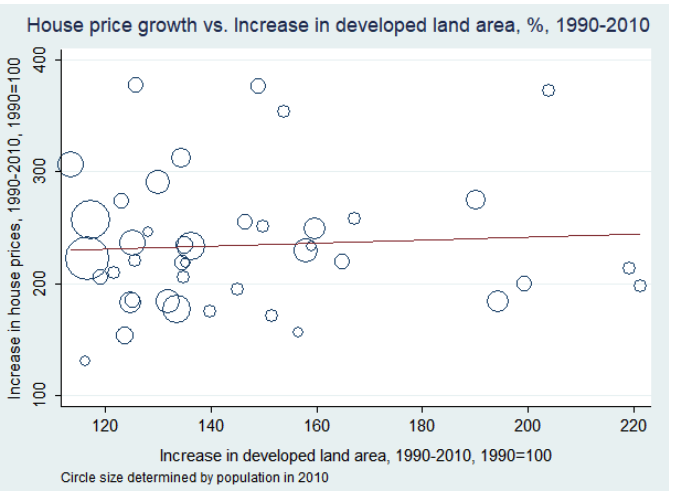
Opening more land area to denser development doesn’t make the homes more affordable. Prices go up as more dense development is allowed.
Read the paper here: